

About Tenebra Lux
Tenebra Lux is a historical fiction literary work, written and illustrated by Protalos, set in the 16th century during a fictional expedition to the “New World,” woven into real historical events.
Set in a time of geographical discoveries and internal fractures, the story blends dense narrative, visual symbolism, and a profound exploration of the human condition at the margins of power, desire, and identity.
It is a philosophical illustrated narrative, with elements of poetic eroticism, existential reflection, and dramatic theatrical construction. Its style combines intense prose with images inspired by Baroque painting (Rembrandt, Caravaggio), generating a complete aesthetic experience: word and image as a single act of introspection.
✦ What is it about?
In a secret journey initiated by powers parallel to the official thrones of Europe, a carefully selected group of individuals is sent south aboard a silent, dark vessel named Tenebra, under the command of Artur Wolsey.
This is no ordinary expedition—neither commercial nor military. It is a concealed operation, precisely orchestrated, where each passenger is chosen not only for what they know, but for what they hide.
Onboard travel fractured, ambiguous, radiant or dangerous figures:
A young Greek deckhand named Nicolau—whose body defies all norms—who will become Nyra through the journey;
An androgynous youth named Lauren, with a piercing gaze and sharp tongue;
An Arab sage carrying a mysterious ancient object;
An English diplomat more interested in human cracks than in the edges of the map;
And a crew both sensual and brutal, dragged by their own unresolved violence.
But the true center of the story is not the destination.
It is the ship itself.
Tenebra is not a vessel.
It is a chrysalis.
A closed, opaque, floating architecture that slowly unravels what its occupants believe themselves to be.
There is no magic on board. No fantasy.
What happens is real—emotional, physical, and irreversible.
The confinement, the tension, the beauty, the restrained desire, the hierarchy, the constant threat: all act as a catalyst.
No one leaves Tenebra unchanged.
Some break. Others rebel. Some… simply awaken.
The voyage, once external, becomes internal.
The sea is merely a backdrop.
The true journey happens inside the body, the voice, the fear, and the name.
Soon, the voyage becomes more than geographical—it becomes an inner crossing, forcing each character to confront what they left unsaid, what they desired, and what they could not resist.
The ship is claustrophobia and promise.
The ocean, a mirror.
The body, a hidden map.
✦ Genre and Approach
Tenebra Lux is a hybrid project that blends:
- Historical literary fiction
- Visual narrative with original Baroque-style art
- Philosophical storytelling with poetic pulses
- Exploration of gender identity, sexuality, power, and belonging
- Symbolic critique of colonialism, religion, political mandates, and armed masculinity
It is not a manifesto.
Not an essay.
Not an adventure novel.
It is a work where each line seeks to dismantle the familiar.
Where the characters do not explain themselves—they burn.
✦ Visual Style
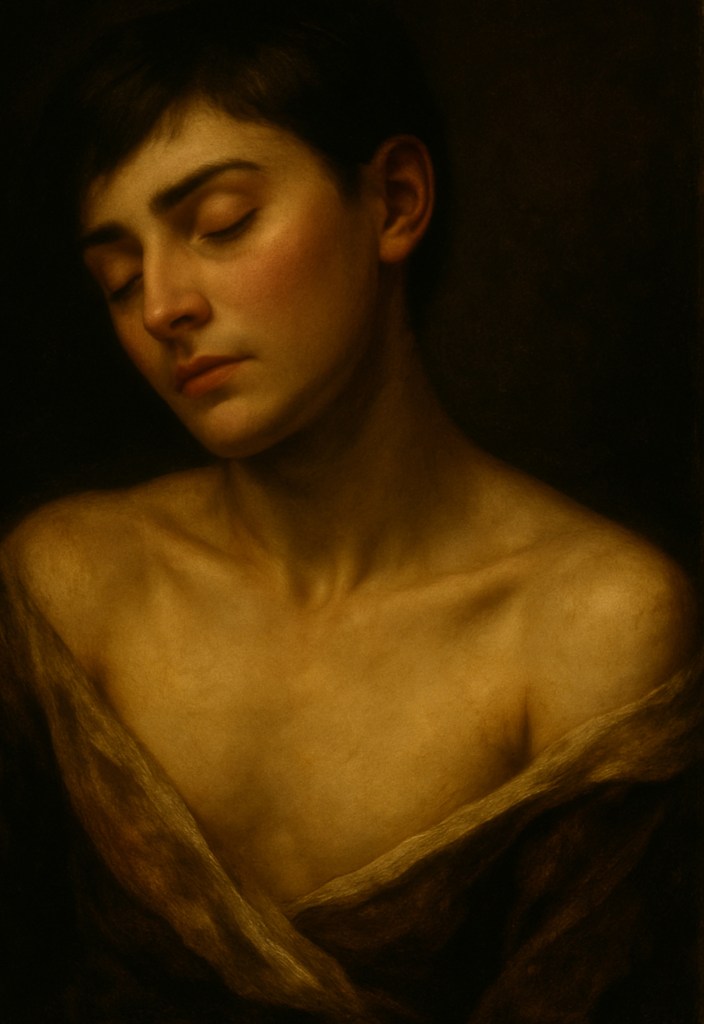
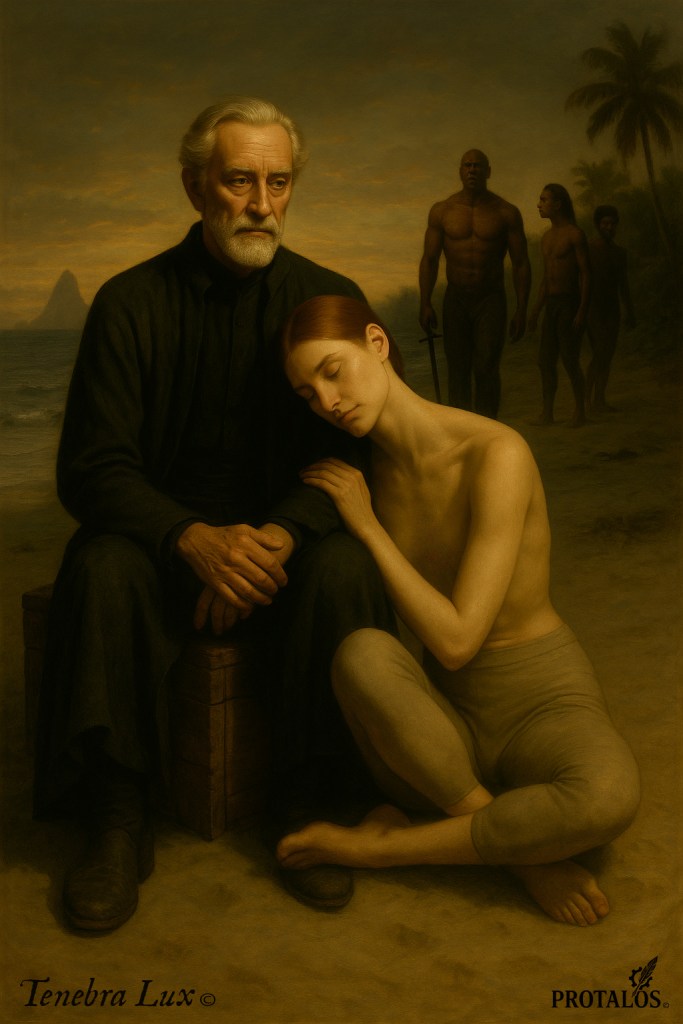
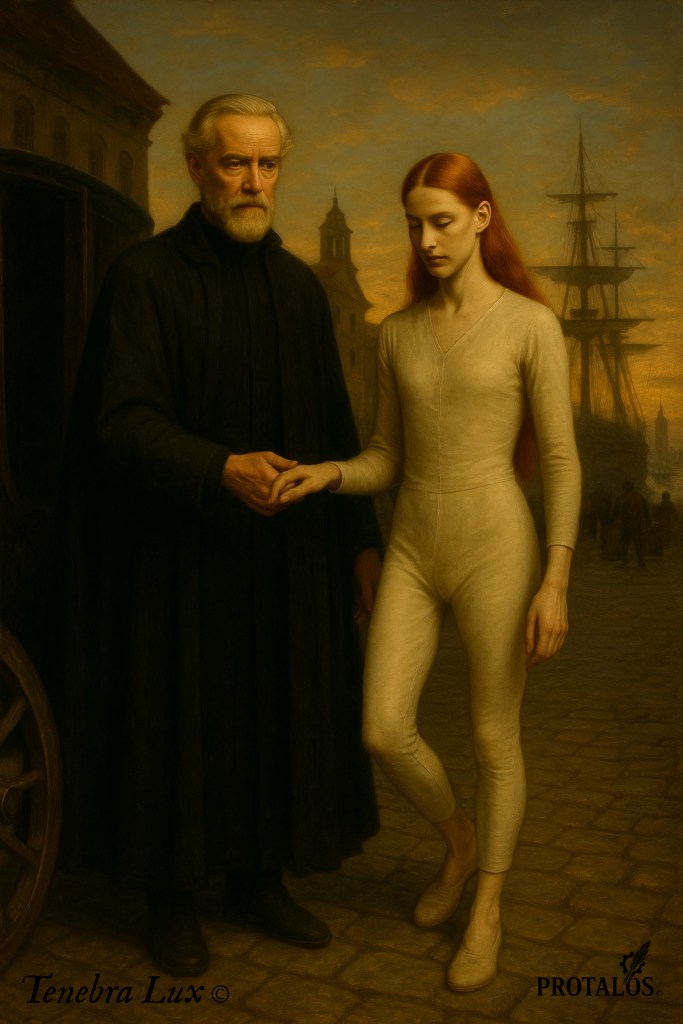
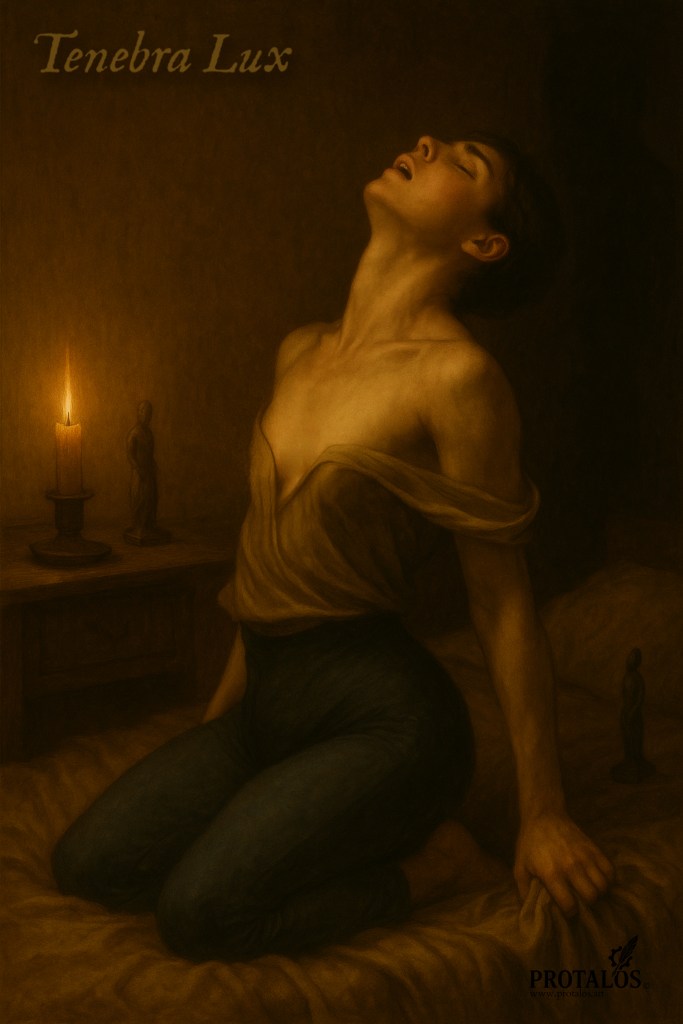
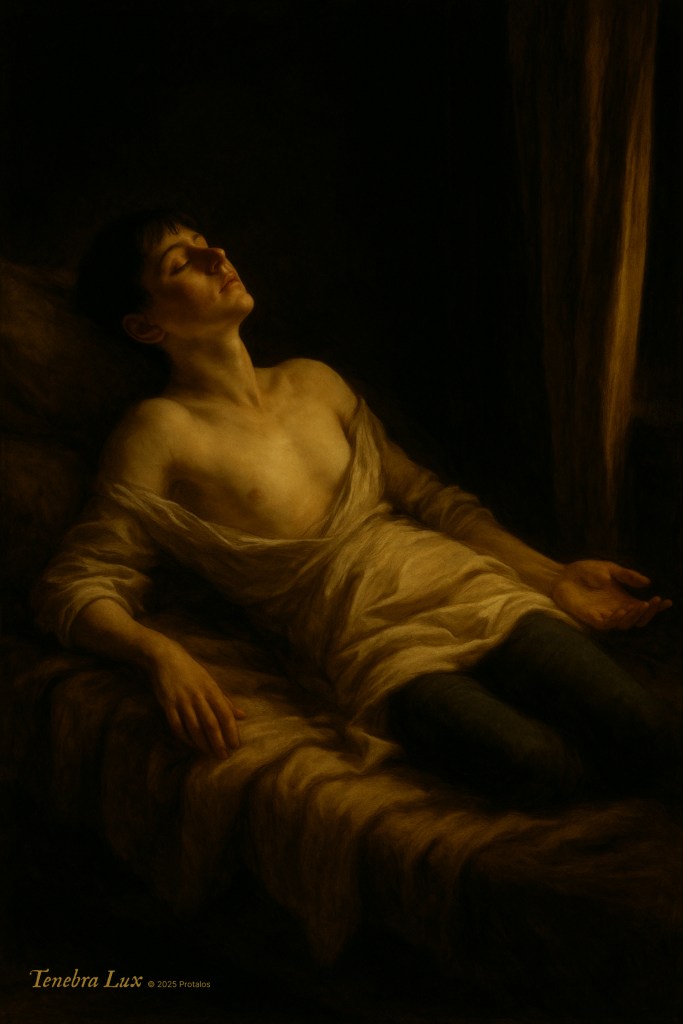
The story is accompanied by original illustrations created in a pictorial style, directly inspired by the dramatic chiaroscuro of Caravaggio and Rembrandt.
Each chapter is conceived as a visual scene—a literary painting in motion.
Composition, lighting, body, and expression are treated with artistic respect and Baroque theatricality, avoiding vulgarity or sensationalism.
There is no commercial eroticism.
Only vulnerability, symbolism, and presence.
✦ Core Themes
- Gender identity and inner transformation
- Power, submission, and desire
- Colonialism, language, and silence
- Memory, exile, and the unsaid
- Philosophy of the body and the «New World»
- Beauty as both sentence and resistance
✦ A Necessary Note
This is a work of fiction. All characters are inventions of the author.
The content addresses delicate themes with artistic depth—not with scandal or provocation.
Tenebra Lux is an invitation to introspection through the limit—that place where history, art, flesh, and language touch without asking for permission.
Each illustration in Tenebra Lux is inspired by the great masters of Baroque painting: Caravaggio, Rembrandt, Velázquez.
Light does not merely illuminate—it wounds, reveals, and transforms.
Here, art does not accompany the text: it expands it.
It translates it into body and face.
 Tenebra lux